

digital vs traditional deposits Key Takeaways
Choosing between digital vs traditional deposits isn’t just about preference — it affects your cash flow, security, and operational efficiency.
- Digital vs traditional deposits differ most in speed: digital deposits clear in hours or days, while paper checks often take 3–5 business days.
- Security features vary dramatically: digital platforms use encryption and multi-factor authentication, while traditional deposits depend on physical safeguards and human oversight.
- Cost is a major differentiator: digital deposit systems typically have lower transaction fees and fewer manual labor costs than traditional methods.
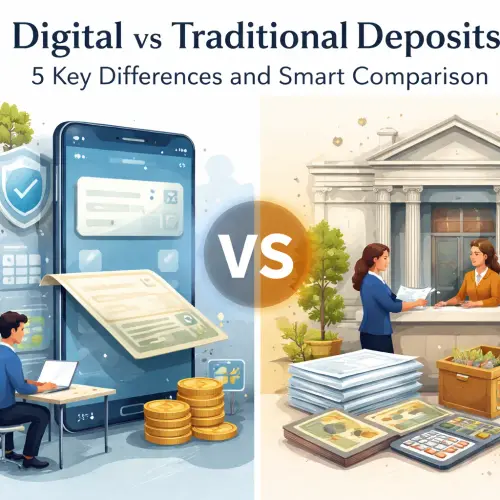
What Readers Should Know About the Difference Between Traditional and Digital Deposits
Every time money lands in your account, a deposit system makes it happen. But the way that system works has changed enormously in the last two decades. Traditional deposit systems — think paper checks, cash deposits at a teller window, and wire transfers initiated in a bank lobby — have been the backbone of commerce for centuries. Digital deposit systems, on the other hand, let you deposit funds from a smartphone, automate recurring payments, and process transactions without ever touching a piece of paper.
Understanding these differences matters whether you’re running a small business that needs predictable cash flow, managing personal finances, or choosing a payroll provider. This article breaks down the core definitions, compares pros and cons, gives real-world examples, and helps you decide which system fits your situation. For a related guide, see 5 Key Traits Proven to Power Faster Payout Systems.
Traditional Deposit Systems Defined: Paper, Branch Visits, and Manual Processing
Traditional deposit systems refer to any method of adding funds to a bank account that involves physical instruments or in-person interaction. Common examples include:
- Depositing a paper check at a bank branch or ATM
- Handing cash to a teller for credit to your account
- Sending a wire transfer via a bank representative
- Using a night drop envelope for after-hours deposits
These methods rely heavily on manual data entry, physical transportation of documents, and human verification. A check deposited on Monday might not show as available funds until Thursday or Friday, because the physical check needs to travel through clearing houses. According to the Federal Reserve, paper-based processing costs banks an estimated $1.50 to $2.00 per transaction after you account for labor, transportation, and fraud detection overhead.
Pros and Cons of Traditional Deposit Systems
Advantages
- Familiarity: Customers and staff alike know how checks and cash deposits work.
- Tangible record: A paper deposit slip or check image provides a physical trail.
- No tech requirements: No need for a smartphone, internet connection, or software training.
Disadvantages
- Slow processing: Funds can take 3–5 business days to clear, delaying access to money.
- High cost: Banks often charge fees for teller-assisted deposits, and businesses pay for check stock, printing, and mailing.
- Error prone: Manual entry leads to typos, misread amounts, and lost deposit slips.
- Limited accessibility: Deposits can only happen during bank hours unless an ATM is available.
Digital Deposit Systems Defined: Automated, Remote, and Real-Time
Digital deposit systems encompass all electronic methods of moving money into a bank account. Key examples include:
- Direct deposit of payroll via ACH
- Mobile check deposit using a banking app
- Electronic funds transfer (EFT) between accounts
- Peer-to-peer payment platforms like Venmo or Zelle
- Automated merchant deposits from payment processors like Stripe or Square
These systems use encrypted digital networks to verify and settle transactions. An ACH deposit typically settles in one to two business days, while real-time payment networks like RTP or FedNow can make funds available in seconds. The cost to process a digital transaction is often under $0.50, and many consumer mobile deposits are free.
Pros and Cons of Digital Deposit Systems
Advantages
- Speed: Most digital deposits clear within 24–48 hours; real-time options exist.
- Convenience: Deposits can be initiated from anywhere, anytime.
- Lower cost: Fewer manual steps mean cheaper per-transaction fees.
- Automation: Recurring deposits can be set up once and run indefinitely.
- Better tracking: Digital records are searchable, sortable, and easy to reconcile.
Disadvantages
- Tech dependency: Requires a reliable internet connection and a compatible device.
- Security concerns: Phishing scams, account takeovers, and data breaches target digital systems.
- Learning curve: Some users, especially older adults, find apps and online portals confusing.
- Dispute resolution: Reversing an erroneous digital deposit can be more complex than stopping a paper check.
Automated Deposit vs Manual Deposit: A Side-by-Side Comparison
One of the most practical ways to understand these systems is to compare automated deposit vs manual deposit directly. The table below highlights the key contrasts across five critical dimensions.
| Dimension | Traditional (Manual) Systems | Digital (Automated) Systems |
|---|---|---|
| Processing speed | 3–5 business days | 1–2 business days (real-time options available) |
| Average cost per transaction | $1.50–$2.00 (including labor and transport) | $0.10–$0.50 |
| Security features | Physical signature, manual verification | Encryption, tokenization, biometric authentication |
| User error rate | Higher (manual keypunch, misread checks) | Lower (validated fields, reject errors before submission) |
| Accessibility | Branch hours, ATM availability | 24/7 from any device with internet |
Real-World Examples of Traditional Deposit Systems vs Digital
Seeing these systems in action helps clarify the practical implications.
Example 1: Small Business Payroll
Maria runs a bakery with eight employees. She used to write paper paychecks every Friday — that meant buying check stock, printing, signing, handing them out, and then waiting for employees to deposit them. If one employee lost a check, Maria had to issue a stop payment and reissue. Now she uses a payroll platform that sends direct deposits via ACH. Funds arrive by Friday morning, employees get instant access, and Maria saves $60 per month in check-related costs.
Example 2: Personal Rent Payment
Jake rents an apartment. He used to mail a paper check to his landlord each month, allowing 5 days for delivery and processing. Twice, the check was lost, incurring late fees. Now he uses a tenant portal that pulls rent from his checking account via digital deposit system. The payment posts on the 1st of every month, and he gets a digital receipt instantly.
Example 3: Nonprofit Donations
Hope Foundation runs annual fundraising galas. Donors used to write checks during the event; volunteers then drove them to the bank the next morning. One year, a bag of checks was left in a cab. Today, the foundation uses a QR code at each table — guests scan and donate via their phones. Money lands in the nonprofit’s account in real time.
How to Choose Between Digital vs Traditional Deposits: A Practical Checklist
Making the right choice depends on your specific situation. Use this checklist to evaluate which system fits your needs.
- Evaluate volume: If you process more than 10 deposits per month, digital is almost always cheaper and faster.
- Consider your audience: Do your customers or employees have reliable internet and smartphones? If not, keep a traditional option available.
- Check your bank’s fee schedule: Compare per-check fees vs. per-ACH fees at your current institution.
- Assess security tolerance: Digital requires strong passwords, two-factor authentication, and phishing awareness. Traditional requires secure physical storage and transport.
- Look for hybrid solutions: Many banks now offer lockbox services that convert paper checks into digital images for faster processing — a great bridge option.
Common Mistakes When Switching from Traditional to Digital
Transitioning from traditional deposit systems to digital isn’t always smooth. Watch out for these pitfalls:
- Not updating account numbers: ACH deposits require accurate routing and account numbers. One digit off can send money to the wrong place.
- Ignoring cut-off times: Digital systems have daily processing deadlines. A deposit initiated after 5 PM ET may not settle until the next business day.
- Overlooking fraud protections: Ensure your bank offers positive pay or debit blocks on digital accounts to prevent unauthorized withdrawals.
- Failing to communicate changes: If you switch from paper checks to direct deposit, notify vendors or employees at least two pay cycles in advance.
Useful Resources
For more detailed guidance, refer to these authoritative sources:
- NACHA — The ACH Network Rules and Guidelines — the definitive resource for understanding how automated clearing house deposits work.
- Federal Reserve Payments System Information — official data on payment processing speeds, costs, and security standards.
Frequently Asked Questions About digital vs traditional deposits
What is the main difference between traditional and digital deposit systems ?
Traditional deposit systems require physical items like paper checks or cash, and processing involves manual handling. Digital deposit systems use electronic transfers that are processed automatically, resulting in faster, cheaper, and more convenient deposits.
Are digital deposits completely secure?
No system is 100% secure, but digital deposits use encryption, multi-factor authentication, and fraud monitoring that often exceed the security of paper checks. However, digital systems are vulnerable to phishing and account takeover attacks, so user vigilance is essential. For a related guide, see 5 Smart Reasons Digital Wallet Casino Payments Are Growing Fast.
How long does a traditional deposit take to clear?
In the United States, a personal check deposited at a bank branch typically takes 3–5 business days to clear. Cash deposited at a teller is available immediately.
How long does a digital deposit take to clear?
Most ACH deposits settle within one to two business days. Real-time payment networks like FedNow and RTP can make funds available in seconds.
Which is cheaper: traditional or digital deposits?
Digital deposits are almost always cheaper. Traditional deposits incur costs for paper, printing, mailing, and manual processing, often totaling $1.50–$2.00 per transaction. Digital transactions typically cost $0.10–$0.50.
Can I use both systems at the same time?
Yes, many businesses and individuals use a hybrid approach — accepting digital deposits for most transactions while keeping traditional methods available for clients who prefer paper checks or lack internet access.
What is an ACH deposit?
ACH stands for Automated Clearing House. An ACH deposit is an electronic transfer of funds from one bank account to another through the ACH network. It’s the most common form of digital deposit for payroll, bill payments, and peer-to-peer transfers.
What is mobile check deposit?
Mobile check deposit allows you to take a photo of a paper check using your bank’s app and submit it for deposit electronically. The check is then processed digitally, and funds are typically available within one to two business days.
Are there deposit limits on digital systems?
Yes. Most banks impose daily and monthly limits on mobile check deposits and ACH transfers. Limits vary by institution and account history, ranging from $2,000 per day to $25,000 or more for high-value accounts.
Do digital deposit systems work for international payments?
Yes, through international wire transfers, SWIFT, or services like Wise and PayPal. However, cross-border digital deposits may take 1–5 days and incur currency conversion fees.
What happens if a digital deposit fails?
If a digital deposit fails — due to incorrect account numbers, insufficient funds, or bank holds — the transaction is reversed. You’ll typically receive a notification explaining the reason, and you can resubmit after correcting the issue.
Can I switch from traditional to digital deposits anytime?
Yes. Most banks and payroll providers allow you to switch at any time. You’ll need to provide your routing and account numbers and authorize the new deposit method. Allow one or two payment cycles for the change to take effect.
Are digital deposits better for small businesses?
Generally, yes. Digital deposits save small business owners time, reduce per-transaction costs, and improve cash flow by making funds available faster. They also simplify bookkeeping with downloadable transaction logs.
Do traditional deposit systems still have advantages?
Yes. They remain useful for cash-heavy businesses (like retail stores), for customers without reliable internet, and in situations where a physical receipt is preferred. They also don’t rely on electricity or internet connectivity.
What is the processing time for a traditional wire transfer?
Domestic wire transfers initiated in-bank typically process within 24 hours. International wires can take 1–5 business days depending on the destination and intermediary banks. Wire fees range from $15 to $50.
What security measures protect digital deposits?
Digital deposit systems commonly use SSL/TLS encryption, tokenization (replacing sensitive data with unique tokens), multi-factor authentication, and real-time fraud detection algorithms that flag suspicious transactions.
How do I verify a digital deposit was received?
You can check your bank account balance and transaction history online or via your banking app. Most apps send push notifications when a deposit posts. You can also set up email or SMS alerts for incoming deposits.
What is a lockbox service?
A lockbox service is a hybrid system where customers mail paper checks to a PO box. The bank collects the checks, scans them, processes them digitally, and deposits funds into your account. It combines the familiarity of paper with the speed of digital processing.
Can I deposit cash digitally?
You cannot deposit physical cash directly into a digital system. However, you can deposit cash at an ATM or bank branch, and the resulting digital balance can then be transferred electronically. Some retailers like Walmart offer cash deposit services that credit your digital account.
Will digital deposit systems replace traditional ones entirely?
While digital deposits are growing rapidly, traditional methods are unlikely to disappear completely for the foreseeable future. Cash and checks remain essential for unbanked populations, informal transactions, and situations where electronic infrastructure fails.