
Why Payment Systems Feel Faster Key Takeaways
Ever tapped your phone and had the payment go through before you could even blink — only to wait awkwardly at another register while the screen spins?
- The single biggest factor that makes a payment feel instant is the user interface: showing immediate feedback like a checkmark or haptic buzz.
- Backend technology — from tokenization to cloud processing — plays a huge role in shaving milliseconds off the actual transaction.
- Network latency is the hidden culprit that can turn a fast system into a frustrating wait, even when the software is perfect.
The Tap That Changed Everything: Why Payment Systems Feel Faster Today
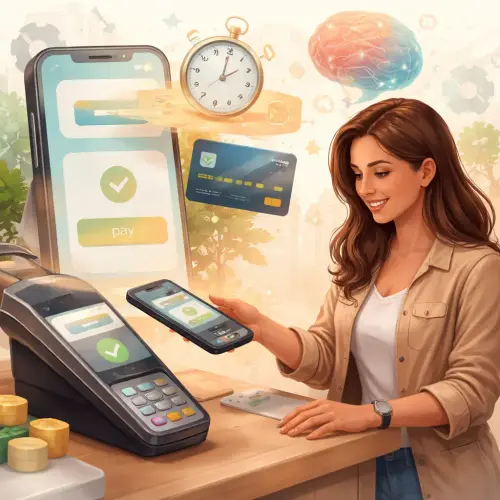
I’ll never forget the first time I used a contactless card. I was at a busy coffee shop in downtown Austin, and the barista barely had time to say “that’ll be four-fifty” before I tapped my card on the reader. A soft beep, a green checkmark, and I was already walking away with my latte. It felt almost magical — like the payment happened before I even decided to pay.
A few days later, I was at a different shop, trying to pay with a mobile wallet. The terminal took what felt like forever. First, a blank screen. Then a loading spinner. Then a prompt to “hold near reader.” Then another wait. After a full eight seconds, it finally approved, and I could feel the annoyed stares from the people behind me. Same coffee. Same amount. Completely different feeling.
That experience got me wondering: why payment systems feel faster isn’t just about actual speed — it’s about perceived speed. And after digging into how modern payment processing works, I found that the secret sauce isn’t just one thing but a combination of smart design, smart tech, and a dash of psychology. For a related guide, see 5 Key Traits Proven to Power Faster Payout Systems.
Fast Payment Systems Start With UX That Tricks Your Brain
The quickest way to make a payment feel fast is to show the user that something happened immediately. This is the single easiest win for any payment system designer.
Instant Visual Feedback: The Green Checkmark Effect
When you tap a card or phone and see a green checkmark within half a second, your brain registers the transaction as complete — even if the backend is still verifying funds. Systems like Apple Pay and Google Pay are masters of this. They pre-authorize locally and show confirmation instantly. On the other hand, older chip readers that go blank for two seconds before showing “processing” make you feel like the transaction failed.
Physical Sensations: The Haptic Buzz
A tiny vibration in your phone or a soft beep from a terminal isn’t just for fun. That haptic feedback creates a physical closure. It signals “done” to your brain, reducing anxiety. Systems that skip this step feel slower and less trustworthy.
Behind the Screen: Backend Tech That Makes Payments Feel Instant
The visual tricks are great, but real speed comes from what happens behind the scenes. The choice of technology can turn a 300-millisecond transaction into a 3-second nightmare.
Tokenization and Cloud Processing
Modern fast payment systems use tokenization — converting your card number into a unique, one-time digital token that’s useless if stolen. This sounds like it would slow things down, but because tokens are pre-generated and stored in the cloud for that specific merchant, validation is nearly instant. Legacy systems that hit a physical bank database for every single transaction are inherently slower.
The Power of Edge Servers
PayPal and Stripe have been investing heavily in edge computing — placing small data centers close to where payments happen. If you’re in New York and the server you hit is in Newark instead of Frankfurt, that’s a difference of 20 milliseconds vs. 150 milliseconds. That margin is often the difference between a smooth tap and an awkward pause.
Network Latency Is the Hidden Thief of Speed
Even the best-designed payment system can be ruined by bad internet. This is the one variable that’s often out of the merchant’s control.
Why Your Coffee Shop Wifi Matters
Ever noticed that some apps seem to work perfectly at your house but lag terribly at a crowded café? Mobile network congestion, slow WiFi, or even an outdated router at the store can introduce 2–5 seconds of latency. Some payment providers handle this better than others by using offline-first architecture — they authorize the payment locally and sync later. For a related guide, see Expert Reasons Why Some Gambling Sites Are Easier to Use.
Chip vs. Tap: The Real Speed Difference
Let’s compare two common scenarios:
| Method | Typical Time to Feedback | Feels Fast? |
|---|---|---|
| Insert Chip (EMV) | 2–5 seconds | No — blank screen, then processing |
| Contactless Tap (NFC) | 0.3–1 second | Yes — instant checkmark and beep |
| Mobile Wallet (Apple/Google) | 0.5–1.5 seconds | Yes — facescan then immediate confirmation |
| Online Payment Gateway (card) | 3–8 seconds | Depends on redirects and latency |
How to Choose a Speedy Payment Method for Your Business
If you’re a merchant or a developer looking to offer fast payment systems, the key factor you control is user interface design and server proximity. Here are three practical steps.
Step 1: Optimize for Contactless by Default
Ensure your terminals support NFC and have the latest firmware. Disable slow fallback options. Even if your backend is average, contactless taps will feel faster.
Step 2: Choose a Gateway With Edge Servers
Providers like Stripe, Square, and Adyen have global edge networks. They minimize latency by routing transactions through the nearest server. Avoid gateways that still route all traffic through a single data center in another country.
Step 3: Test With Real Latency Tools
Use tools like Pingdom or WebPageTest to measure how fast your payment page loads and processes. A difference of 200 milliseconds can make or break conversion rates. Aim for a total checkout experience under 3 seconds.
Final Recommendations for a Smoother Checkout
At the end of the day, why payment systems feel faster comes down to a single key factor: the user’s perception of completion. You can have the fastest backend in the world, but if the screen shows a loading spinner for two seconds, it will feel slow. Conversely, a well-designed UX that shows immediate confirmation can make a 1-second backend feel instant.
For consumers, look for payment methods that give you visible and tactile feedback — green checkmarks, vibrations, and immediate screen changes. For businesses, invest in terminal firmware, choose a low-latency gateway, and always test your checkout flow under real-world network conditions. A fast payment experience isn’t just a nice-to-have — it’s a competitive advantage that keeps customers coming back.
Useful Resources
For more on payment UX and latency reduction, check out Stripe’s Checkout documentation and Apple Pay developer guides.
Frequently Asked Questions About Why Payment Systems Feel Faster
What is the fastest payment method?
Contactless NFC payments like Apple Pay and Google Pay are generally the fastest because they use local tokenization and immediate visual feedback.
Why do some card payments feel slower than others?
It often depends on the terminal firmware, the payment gateway’s server location, and whether the system uses chip insertion (slow) or tap (fast).
Does the internet speed of the store affect payment speed?
Yes, if the terminal relies on the store’s WiFi or mobile network, congestion can add 2–5 seconds of delay.
What is tokenization in payment systems?
Tokenization replaces sensitive card details with a unique digital token, making transactions faster and more secure by reducing the need to contact the bank for every transaction.
How does haptic feedback make payments feel faster?
A vibration or beep signals completion instantly to your brain, reducing the perception of waiting time.
Is Apple Pay faster than using a contactless card?
Yes, because Apple Pay pre-authenticates with Face ID or Touch ID locally, so the terminal only needs to confirm the token.
Why does my chip card take so long to process?
EMV chip transactions require a cryptographic exchange between the card and the terminal, which can take 2–5 seconds depending on the reader.
Can a payment gateway make a difference in speed?
Absolutely. Gateways with edge servers (like Stripe or Adyen) route transactions to the nearest data center, cutting latency significantly.
What is perceived speed vs actual speed in payments?
Perceived speed is how fast the user thinks the transaction happened, while actual speed is the real time from tap to confirmation. Good UX closes this gap.
Why do some online payments redirect to a bank page?
Some banks require 3D Secure authentication, which adds a redirect and extra steps, making the payment feel slower.
Does Samsung Pay work the same as Apple Pay?
They work similarly, but Samsung Pay also supports MST (magnetic secure transmission) for older terminals, which can add slight delays.
What is the fastest online payment method?
Digital wallets like PayPal One Touch or Amazon Pay that store your info and bypass redirects are the fastest for online checkout.
Can a bad terminal cause slow payments?
Yes, outdated terminals with old firmware and slow processors can add seconds even to contactless taps.
What is edge computing in payment systems?
Edge computing places small data centers close to where payments happen to reduce travel time for data, speeding up transactions.
Why do some payment apps show a checkmark before the transaction is approved?
That’s a UX trick — the app shows confirmation immediately to make the experience feel faster while the backend finishes processing.
Does 5G make mobile payments faster?
Yes, because lower latency and higher bandwidth reduce the time it takes for the payment request to reach the server and return a response.
Is PayPal faster than entering credit card info?
Yes, because PayPal eliminates manual data entry and redirects, cutting checkout time by up to 30%.
What is the single most important factor for payment speed?
The key factor is immediate feedback after the tap — a green checkmark or beep — which makes the system feel instant even if the backend takes a moment.
Can a merchant speed up their payment terminal?
Yes, by updating terminal firmware, enabling contactless, and choosing a faster payment gateway with local servers.
Why does paying with my phone feel faster than inserting my chip?
Because NFC payments use a simpler cryptographic handshake than EMV chip insertion, and phones also pre-authenticate the user.