

cashback vs spin rewards Key Takeaways
Reward programs are everywhere—credit cards, online shopping portals, and loyalty apps all compete for your attention.
- Cashback vs spin rewards hinges on predictability: cashback guarantees a return, spin rewards are probabilistic.
- Cashback rewards typically have lower maximum value but offer stability; spin-based systems can deliver higher payouts but with lower odds.
- Your spending habits and risk tolerance should drive your choice between these two reward structures.
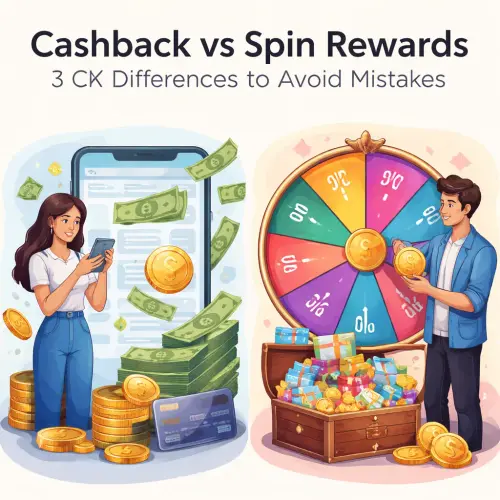
Why Understanding Cashback vs Spin Rewards Matters
Reward programs are everywhere—credit cards, online shopping portals, and loyalty apps all compete for your attention. But not all rewards are created equal. The fundamental difference between cashback and spin-based rewards affects how much value you actually receive and how predictable that value is. Making the wrong choice could leave money on the table.
Cashback rewards return a fixed percentage of your spending as statement credits, cash, or points that convert directly to money. Spin-based rewards, on the other hand, use a randomized wheel, slot, or game where you win varying prizes—ranging from small bonuses to large jackpots. The core distinction is certainty versus chance.
Let’s explore the three main differences that will help you decide which system fits your goals.
Difference #1: Predictability of Value in Cashback vs Spin Rewards
The biggest factor separating these reward types is how predictable the payout is. Cashback offers a known return: spend $100, get $2 back (if the rate is 2%). You can calculate exactly what you’ll earn. Spin rewards, however, depend on probability. You might win a $0.50 bonus on one spin and a $50 credit on another—or nothing at all.
This unpredictability makes spin rewards exciting but unreliable for consistent saving. Cashback is a slow, steady builder; spin rewards are a lottery with variable outcomes.
Example of Predictability in Action
Imagine you spend $500 monthly on a platform offering either 3% cashback or a weekly bonus spin. With cashback, you earn $15 every month without fail. With spin rewards, your monthly haul could range from $0 to $100 depending on luck. Over a year, cashback guarantees $180. Spins might give you more or less—there’s no certainty.
Difference #2: Maximum Potential Earnings
Cashback programs cap your earning potential at the advertised rate. If you earn 5% cashback on dining, the most you can get is 5% of what you spend in that category. Spin-based systems, however, can offer outsized rewards—sometimes hundreds of dollars in free credits or prizes from a single spin.
This makes spin rewards attractive for high-risk, high-reward players. But the odds of hitting top prizes are often very low. Cashback is a steady earner; spin rewards are a potential home run. For a related guide, see 7 Hidden Bonus Term Details Smart Players Must Avoid.
Comparing Expected Value
Let’s say a spin wheel offers prizes from $0.10 to $100, with an average expected value of $0.80 per spin. Over 500 spins, you might earn around $400—but you could also earn much less. Cashback at 2% on the same $500 spending would give you $10, guaranteed. Spin rewards can beat cashback if you are lucky, but the expected value is often similar or lower once you account for probability. For a related guide, see Free Spin Offers: 9 Expert Tips to Find Worthwhile Promos.
Difference #3: Psychological Impact and User Engagement
Reward programs aren’t just about math—they also tap into psychology. Cashback feels safe and reliable, reinforcing trust. Spin rewards tap into the excitement of gambling, which can drive higher engagement and repeat visits. This is why many apps and casinos favor spin-based systems: they keep users coming back for “one more try.”
But that excitement can lead to overspending. Users may chase losses or spin more than they intended. Cashback encourages disciplined spending because the reward is passive and predictable.
Which Reward Type Builds Better Habits?
If you are budget-conscious or saving for a specific goal, cashback rewards align with long-term financial health. If you enjoy gamification and are comfortable with risk, spin rewards can be a fun bonus—as long as you set strict limits on spending and play.
Practical Decision Framework: Choosing Between Cashback vs Spin Rewards
Here’s a quick checklist to help you decide which reward system fits your personality and goals:
- Choose cashback if: you want guaranteed returns, are saving for something specific, or dislike the uncertainty of games.
- Choose spin rewards if: you enjoy the thrill of chance, are using free spins from promotions, and can stick to a budget without chasing losses.
- Mix both if: the program allows—use cashback for essential spending and spin rewards for discretionary fun.
Comparison Table: Cashback vs Spin Rewards
| Factor | Cashback Rewards | Spin-Based Rewards |
|---|---|---|
| Predictability | Guaranteed return (e.g., 2% of spend) | Probabilistic; varies per spin |
| Maximum potential | Capped at the reward rate | Uncapped top prizes possible |
| Psychological effect | Steady, trust-building | Exciting, may encourage overspending |
| Best for | Budget-conscious savers | Gamification seekers |
| Risk level | Low (guaranteed) | Medium to high (variable) |
Common Pitfalls to Avoid with Both Reward Systems
Even with a clear understanding of cashback vs spin rewards, users often make mistakes. Here are three pitfalls to watch for:
- Chasing spins without spending discipline: Spin rewards can tempt you to spend more just to get another chance at a big prize. Set a hard limit.
- Ignoring terms and conditions on cashback: Many cashback programs have caps, expiry dates, or minimum withdrawal thresholds.
- Comparing nominal values without probability context: A spin offering “up to $500 cashback” sounds great—but if the odds are 1 in 10,000, the expected value is tiny.
Useful Resources
For deeper insight into reward program mechanics, check out the following resources:
- NerdWallet: Cash Back vs. Points – Which Is Better?
- Investopedia: How to Calculate the Expected Value of a Signup Bonus
Frequently Asked Questions About Cashback vs Spin Rewards
Understanding cashback vs spin rewards empowers you to make smarter choices with every purchase. Whether you prefer the steady reliability of cashback or the thrill of spinning for big rewards, knowing the differences helps you maximize value and minimize regret.
Frequently Asked Questions About cashback vs spin rewards
What is the main difference between cashback and spin rewards?
Cashback gives you a guaranteed percentage of your spending back as money or credit, while spin rewards are randomized—you have a chance to win prizes of varying value.
Which reward type gives better value?
It depends on your luck and spending. Cashback offers consistent value, while spin rewards can sometimes deliver much larger payouts but with lower overall expected value.
Can I use both cashback and spin rewards together?
Yes, many programs offer both. Use cashback for everyday spending and spin rewards for promotional offers or entertainment.
Are spin rewards a form of gambling?
They share similarities—random outcomes, variable prizes—but are typically regulated as promotional incentives rather than gambling.
How do cashback rates compare to spin average payouts?
Cashback rates are fixed (e.g., 2–5%). Spin average payouts depend on the prize distribution; a well-designed spin game might average 1–3% of spend, but it varies widely.
Do spin rewards expire faster than cashback?
Often yes. Spin rewards—especially bonus credits—tend to have shorter expiry windows than cashback balances.
Which is better for long-term savings?
Cashback is better because it provides predictable, cumulative returns that you can plan around.
Which is more exciting for users?
Spin rewards are more exciting due to the thrill of chance and the potential for a big win, which is why they are popular in gamified loyalty programs.
Can spin rewards be converted to cash?
Sometimes yes, but often spin winnings are given as bonus credits or site currency with restrictions on withdrawal.
Do all cashback programs have caps?
No, but many do. Some unlimited cashback cards exist, but you should always check the terms.
How do I calculate the expected value of a spin reward?
Multiply each prize amount by the probability of winning it, then sum the results. That gives you the average value per spin.
Which reward type is better for frequent small purchases?
Cashback is ideal because every purchase earns a fixed return, while spins often require a minimum spend or entry threshold.
Are spin rewards more common in crypto or Web3 platforms?
Yes, many crypto apps use spin wheels or mystery boxes as engagement tools, often offering token prizes.
Can I lose money with spin rewards?
Indirectly yes—if you spend more to earn spins than the prizes are worth, or if you purchase spins separately.
Which reward type do credit card companies prefer?
Credit card companies heavily favor cashback because it is predictable and easier to expense against their marketing budgets.
Do retailers use spin rewards more than cashback?
Shopping apps and some retailers use spin rewards for promotions, but cashback is more common in loyalty programs overall.
What are the tax implications of cashback vs spin rewards?
In many jurisdictions, cashback is considered a discount or rebate and not taxable. Spin winnings may be taxable if they exceed certain thresholds or are in cash.
How do I optimize my rewards mix?
Use cashback for predictable everyday spending and spin rewards only when offered as a free bonus or with very favorable odds.
Which reward type is more transparent?
Cashback is far more transparent—you know exactly what you earn. Spin reward odds are often hidden or difficult to calculate.
Can spin rewards have negative expected value?
Yes, if the platform charges you per spin or the average payout is less than what you pay to spin, it is negative expected value.