
promotions sound better than they really are Key Takeaways
Promotion tricks often rely on anchoring, a cognitive bias where the first number you see becomes your reference point.
- promotions sound better than they really are because of classic psychological tricks like anchoring, framing, and the illusion of scarcity.
- Retailers and service providers use specific promotion tricks to mask hidden costs, limited stock, or inflated original prices.
- By learning to spot these tactics, you can evaluate offers critically and avoid regret after purchase.
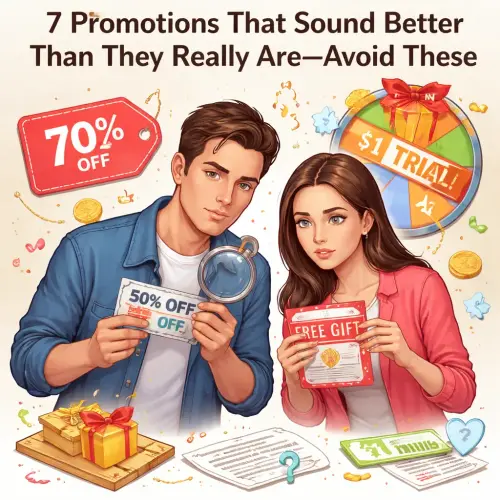
What Makes promotions sound better than they really are So Convincing?
Picture this: a coffee shop advertises “Buy one, get one free” on its premium lattes. You grab a friend and order two. The barista rings up the total, and you notice the price for a single latte is $7.50—far above the usual $5.00. The “free” latte is effectively a 25% discount on an overpriced drink. This is a classic example of how promotions sound better than they really are when you don’t check the baseline.
The Psychology of Anchoring and Framing
Promotion tricks often rely on anchoring, a cognitive bias where the first number you see becomes your reference point. Advertisers inflate the original price so that the discounted price looks like a steal. Framing works alongside anchoring: “Save $50” sounds more appealing than “You pay $150,” even when both statements are mathematically identical. These subtle psychological pricing tactics are designed to bypass your rational brain and hit the emotional “reward” center instead.
Scarcity and Urgency as Persuasion Tools
“Only 3 left in stock!” “Sale ends in 2 hours!” These urgency triggers make promotions sound better than they really are by pushing you to act before you can think. When you feel time pressure, you’re less likely to compare prices, read terms, or calculate the actual value. This is one of the most powerful promotion tricks because it short-circuits deliberate decision-making. For a related guide, see Avoid These Risky Casino Promotions: 5 Expiry Date Traps.
7 Common Promotion Tricks That Mask Hidden Costs
Below are the most prevalent ways retailers and marketers inflate the perceived value of a deal while you end up paying more than you expected. Recognizing these patterns is the key to evaluating any offer critically.
1. The “Was $100, Now $50” Inflated Original Price
Some brands never sell a product at the full price. They set an artificially high MSRP solely to make the discount look dramatic. When you see a 50% off tag, check whether the product was ever actually sold at that higher price. If not, the discount is a fiction, and promotions sound better than they really are because the “savings” never existed.
2. Minimum Purchase Requirements
“20% off your entire order” sounds generous—until you discover you must spend at least $100 to qualify. If you didn’t need that many items, you either overpay or forfeit the discount. This is a classic promotion trick that encourages overspending under the guise of a reward.
3. Bundled Deals With Unwanted Items
“Buy a laptop, get a printer, mouse, and backpack free.” The catch? The laptop’s price has been inflated by $200, and you may already own a perfectly good mouse. Bundles often include items with little personal value, making the overall promotion sound better than it really is.
4. Subscription Trap With Free Trial
“Try our premium service for 30 days free!” You enter your credit card details, forget to cancel, and later see a hefty monthly charge. Many people never use the service after the trial, but the company counts on inertia. This is a deliberate promotion trick that converts free trials into recurring revenue.
5. Tiered Discounts That Favor Big Spenders
“Spend $50, get 5% off. Spend $100, get 15% off.” The tiered structure pushes you toward the higher threshold, even if you only needed $40 worth of goods. You end up spending more to “save” more, but your net outlay increases. This is a textbook example of why promotions sound better than they really are.
6. Doorbuster Items Sold Out Before You Arrive
Retailers advertise a few deeply discounted items to draw crowds. Once you’re inside, those items are “unfortunately sold out,” and you’re left browsing full-price merchandise. The promotion tricks here include bait-and-switch tactics that rely on the sunk cost of your time and effort.
7. Buy One, Get One With Hidden Limitations
“BOGO free” often means you have to buy the highest-priced item to get the cheapest one free, or you must purchase two identical products. This limits your savings and can be worse than a straightforward 20% off. Always read the fine print to see how hidden costs in deals erode the advertised benefit.
How Psychological Pricing Tactics Manipulate Your Decision-Making
Beyond individual promotion tricks, marketers rely on a suite of price-ending strategies, contrast effects, and decoy pricing to guide your choices. Understanding these will help you see through the curtain.
Charm Pricing: Why $9.99 Beats $10.00
Items ending in .99 are perceived as significantly cheaper, even though the difference is a single cent. This psychological pricing tactic works because our brains process the first digit and round down. When a promotion uses charm pricing alongside a discount, the perceived savings feel even larger than they are.
The Decoy Effect in Comparison Shopping
Imagine a small coffee for $2, a medium for $3.50, and a large for $4. The medium seems overpriced—so you “upgrade” to large and feel smart. The medium is a decoy designed to steer you toward the most profitable option. This structure makes some promotions sound better than they really are because you’re comparing deals that were engineered in your favor.
| Tactic | How It Works | How to Protect Yourself |
|---|---|---|
| Charm pricing | Prices ending in .99 reduce perceived cost | Round up mentally before comparing |
| Decoy effect | An overpriced option makes a premium option look reasonable | Focus on absolute value, not relative pricing |
| Anchoring | Original price sets a false reference point | Check independent price history (e.g., CamelCamelCamel) |
| Scarcity claims | Limited stock or time pressures rapid buying | Walk away and revisit later |
Actionable Tips to Evaluate Offers Critically and Avoid Hidden Costs in Deals
Now that you know the inner workings of promotion tricks, it’s time to build a personal checklist. Apply these steps every time you encounter an offer that feels too good to be true.
1. Always Look for the Baseline
Search for the product’s average price over the last 30 days using tools like CamelCamelCamel (for Amazon) or a simple web search. Compare the sale price to that baseline, not the “was” price printed on the tag. This prevents you from falling for inflated original prices.
2. Read the Terms and Conditions in Full
Most hidden costs in deals live in the fine print. Check for expiration dates, exclusions, minimum purchase amounts, and non-refundable deposits. If the terms are missing or vague, treat the promotion as suspicious. Trustworthy offers are transparent about limitations.
3. Calculate the Unit Price
Promotions sound better than they really are when you don’t normalize for quantity. A “buy two, get one free” deal on laundry detergent might cost more per ounce than buying the single large container. Always divide the total cost by the number of units (ounces, uses, months) to see the real per-unit price.
4. Pause Before You Purchase
Urgency is the enemy of good judgment. When you feel rushed, step away for at least 15 minutes. Ask yourself: “Would I buy this at full price?” If the answer is no, the discount is irrelevant. This simple pause neutralizes the most effective promotion tricks.
5. Use a Cooling-Off Period for Subscriptions
Before signing up for any free trial, set a reminder on your phone to cancel three days before the trial ends. Better yet, use a virtual credit card with a spending limit or a service like Privacy.com to generate single-use card numbers. This protects you from auto-renewal hidden costs in deals.
Final Recommendations: Trust Your Analytical Brain, Not Your Gut
The next time you see a banner screaming “70% off,” remember the coffee shop with the $7.50 latte. Promotions sound better than they really are because they are designed to exploit cognitive shortcuts—anchoring, framing, scarcity, and contrast. But you now have the tools to deconstruct any offer into its real components: baseline price, unit cost, terms, and personal utility.
Start applying these evaluation steps today. Over time, you’ll develop a sixth sense for why promotions mislead, and you’ll only say “yes” to deals that genuinely benefit you. Share this guide with friends who love a bargain—they’ll thank you when they stop overpaying for “savings.”
Useful Resources
To further explore psychological pricing tactics and consumer protection, visit these resources:
- Federal Trade Commission – Dealing with Sale Promotions – Official guidance on recognizing misleading offers and reporting them.
- Investopedia – Psychological Pricing – A detailed overview of pricing strategies and their real-world applications.
Frequently Asked Questions About promotions sound better than they really are
Why do promotions sound better than they really are?
Marketers use cognitive biases like anchoring, framing, and scarcity to inflate perceived value. These psychological pricing tactics make discounts appear larger than they are by manipulating the reference point or creating artificial urgency.
What are common promotion tricks used by retailers?
Common promotion tricks include inflated original prices, minimum purchase requirements, bundled deals with unwanted products, subscription traps, tiered discounts that encourage overspending, and bait-and-switch doorbusters.
How can I tell if a promotion is misleading?
Check the product’s average price over the last 30 days, read the fine print for exclusions, calculate the unit price, and avoid making a decision under time pressure. If the terms are vague or the savings seem disproportionate, the offer is likely designed to mislead. For a related guide, see Fair Bonus vs Misleading: 7 Smart Ways to Spot the Difference.
What is anchoring in promotional pricing?
Anchoring is a cognitive bias where the first number you see (the “anchor”) becomes your reference point. Retailers set a high original price to anchor your perception, then show a discounted price that feels like a bargain—even if the discounted price is still higher than the product is worth.
How does scarcity affect my buying decisions?
Promotion tricks use scarcity (limited stock or time) to create fear of missing out. This emotional pressure reduces rational analysis, making you more likely to purchase without fully evaluating the deal. Real scarcity exists, but many claims are exaggerated or fabricated.
Are “Buy One, Get One” offers always a good deal?
Not necessarily. Many BOGO offers require you to buy the most expensive item to get the cheapest one free, or you must purchase two identical products. This can result in a discount of only 25% to 30%, which is often worse than a straightforward 20% off everything.
What hidden costs should I watch for in subscription deals?
Hidden costs in deals for subscriptions often include automatic renewal at a higher rate, non-refundable setup fees, minimum commitment periods, and additional charges for premium features. Always read the cancellation policy and set a reminder to cancel before the trial ends.
How can I avoid overpaying during a sale?
Compare the sale price to the product’s average selling price over the last 30 days using price history tools. Calculate the unit price and decide if the item is worth full price. If it isn’t, the discount is not a real saving.
What psychological pricing tactics work best on consumers?
Charm pricing (ending in .99), the decoy effect, anchoring, and bundling are among the most effective psychological pricing tactics. They bypass your analytical brain and appeal to emotional triggers like loss aversion and the desire for a bargain.
Is it better to wait for a promotion or buy now?
It depends on your need and the product category. For many electronics, clothes, and home goods, prices fluctuate cyclically. If you can wait, set a price alert and buy when the deal matches a pre-established fair price. Avoid impulse purchases on “limited-time” offers.
What is the decoy effect in promotions?
The decoy effect occurs when a third, less attractive option is introduced to make one of the other two options seem more appealing. For example, a large coffee priced slightly higher than a medium makes the large look like a great value, even if you didn’t need that much coffee.
How do stores use the “was/now” pricing strategy?
Stores select a high “was” price that was never actually used (or used only briefly) to make the “now” price look like a deep discount. This is one of the most common promotion tricks on retail websites and in physical stores.
What are bait-and-switch promotions?
Bait-and-switch involves advertising a low-priced item to attract customers, then telling them it’s sold out and pushing a higher-priced alternative. This practice is considered deceptive and is prohibited by consumer protection laws in many jurisdictions.
Why do promotions often include an asterisk?
The asterisk indicates terms and conditions that follow in fine print. These often exclude popular items, set minimum purchase thresholds, or limit the discount to specific categories. Always read the asterisked details before proceeding to checkout.
How can I protect myself from hidden fees in hotel or travel deals?
Hidden costs in deals for travel include resort fees, cleaning fees, service charges, and parking fees that are not included in the advertised nightly rate. Use travel booking sites that display the total price upfront, and always call the property to confirm all mandatory fees before booking.
Are cashback offers always legitimate?
Most cashback offers are legitimate, but some require multiple steps (clicking links, entering codes) and have strict expiration windows. Others link to apps that track your purchases across sites. Read the terms to ensure you understand how you receive the cashback and whether it can be combined with other promotions.
What should I do if I fall victim to a misleading promotion?
First, contact the retailer to request a refund or price adjustment. If that fails, report the offer to your local consumer protection agency or the Federal Trade Commission. For online purchases, your credit card company may help process a chargeback if the promotion was deceptive.
How do loyalty programs contribute to misleading promotions?
Loyalty programs can make promotions sound better than they really are by awarding points that have low redemption value, expire quickly, or require spending thresholds to unlock. Customers often overspend to earn points that never translate into meaningful savings.
What are tiered discounts and why are they tricky?
Tiered discounts offer increasing percentage off as you spend more (e.g., 5% off $50, 15% off $100). They nudge you to spend more than intended to reach a higher tier. Promotion tricks like this increase your total outlay while making you feel like you saved more.
Can social media influencers make promotions sound better than they really are?
Yes. Influencers often share discount codes or affiliate links without disclosing that they receive a commission. Their personal endorsement can make a mediocre deal feel exclusive or time-sensitive. Always evaluate the product’s value independently, even if someone you trust recommends it.