

Security Concerns With Online Casino Payments Key Takeaways
The excitement of playing at an online casino can quickly turn sour if your financial details fall into the wrong hands.
- Data breaches and phishing scams are the most prevalent security concerns with online casino payments , targeting both player credentials and financial accounts.
- Using licensed casinos, checking for SSL encryption, and choosing trusted payment gateways like PayPal or Skrill are essential for safe online casino transactions .
- Implementing strong personal security habits, such as using unique passwords and enabling two-factor authentication, significantly reduces your risk of online gambling payment threats .
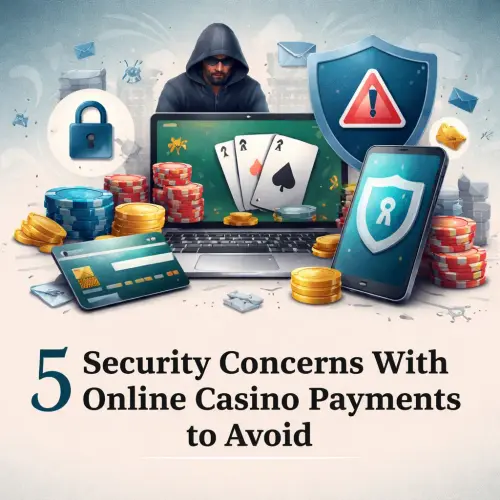
What Are the Core Security Concerns With Online Casino Payments?
When you play for real money, you are trusting the casino with sensitive data. Unfortunately, the digital nature of these transactions creates several vulnerabilities. Let’s explore the most pressing issues that every player should know about online casino payment security. For a related guide, see Digital Wallet Casino Payments: 5 Smart Benefits Players Must Know.
Phishing Attacks Targeting Players
One of the most common online gambling payment threats comes not from a casino’s servers, but directly from criminals targeting you. Phishing emails or messages often mimic official casino communication, asking you to “verify your account” or “confirm a withdrawal.” Clicking the embedded link takes you to a fake login page designed to steal your username, password, and even credit card details. For a related guide, see 5 Smart Reasons Digital Wallet Casino Payments Are Growing Fast.
Always navigate to your casino account by typing the URL directly into your browser rather than clicking links in emails. Legitimate casinos will never ask for your full password or PIN via email.
Weak Encryption and Insecure Connections
A secure website uses SSL (Secure Sockets Layer) encryption, indicated by a padlock icon in the address bar and an “https” URL. If a casino’s payment page lacks this, any data you send—including your card number—is transmitted in plain text. This is a major red flag and one of the most dangerous security concerns with online casino payments.
Before entering any financial information, double-check that the connection is secure. Public Wi-Fi networks are particularly risky; avoid making deposits or withdrawals when connected to a shared or unsecured network.
Data Breaches at the Casino Level
Even a well-regarded online casino can fall victim to a data breach. In these events, cybercriminals gain access to the casino’s internal databases, potentially exposing thousands of player records, including names, addresses, and payment details. This is why choosing a casino with a strong security track record is vital for safe online casino transactions.
Look for casinos that hold licenses from reputable authorities like the UK Gambling Commission or the Malta Gaming Authority, as these bodies enforce strict data protection standards.
How to Ensure Safe Online Casino Transactions: A Step-by-Step Guide
Protecting your money starts with proactive steps. The following process will help you evaluate a casino’s security before you spend a single dollar.
Step 1: Verify the Casino’s License and Reputation
Before creating an account, check the casino’s footer for its license number. A legitimate operator will display this information prominently. You can cross-reference the license on the regulator’s official website to confirm it is valid. This is your first line of defense against online gambling payment threats. For a related guide, see Proven Payout Verification Steps: Avoid These 5 Common Mistakes.
Additionally, read independent reviews from other players on forums or review sites. Multiple reports of payment delays or account closures are serious warning signs.
Step 2: Confirm Security Features (Encryption and Payment Gateways)
Next, examine the site’s security credentials. Look for the padlock icon in your browser’s address bar. For safe online casino transactions, the platform should use 128-bit or 256-bit SSL encryption. Also, check which payment methods are offered. Trusted gateways like Visa, Mastercard, PayPal, Skrill, and Neteller have their own robust fraud detection systems, adding an extra layer of protection.
Step 3: Use Strong, Unique Passwords and Two-Factor Authentication (2FA)
Even the most secure casino cannot protect you if your password is weak. Use a password manager to generate and store a complex, unique password for your casino account. If the casino offers two-factor authentication (2FA), enable it immediately. This requires a second code from your phone, making it nearly impossible for hackers to access your account even if they steal your password. This simple step significantly reduces security concerns with online casino payments.
Step 4: Review Withdrawal Policies Before Depositing
A common online gambling payment threat is the unexpected withholding of funds. Read the casino’s terms and conditions regarding withdrawals. Check for excessively high minimum withdrawal amounts, long processing times, or unreasonable wagering requirements on bonuses. These can be indicators of a less reputable operator. A trustworthy casino will clearly state its payment policies.
Common Red Flags to Identify Unsecure Payment Systems
Knowing what to look for can save you from financial loss. Here are several red flags associated with insecure payment systems.
- No visible SSL certificate: The address bar does not show “https” or a padlock icon.
- Only cryptocurrency with no alternative: While crypto can be secure, a casino that only accepts it may be trying to avoid traditional banking oversight.
- Requests for unnecessary personal documents: Legitimate casinos need verification, but excessive demands for copies of your passport or bank statements before a small withdrawal can be a sign of a “slow pay” tactic.
- No clear customer support: If you cannot find a phone number, live chat, or an email address for support, you have no recourse if a payment issue arises.
- Negative reviews focused on payment issues: A consistent pattern of players complaining about not being paid is the biggest warning sign of all.
Best Practices for Long-Term Online Casino Payment Security
Maintaining security is an ongoing process. Adopting these habits will help you consistently achieve safe online casino transactions.
Monitor Your Bank and Casino Statements Regularly
Review your bank account and casino transaction history at least once a week. Look for any small, unauthorized charges, which fraudsters often use to test a stolen card before attempting a larger withdrawal. Early detection is key to minimizing damage.
Use Dedicated Payment Methods
Consider using a prepaid card or an e-wallet specifically for online gambling. E-wallets like PayPal or Skrill act as a buffer between the casino and your main bank account, so the casino never sees your bank details. This is one of the most effective ways to mitigate security concerns with online casino payments.
Keep Software and Devices Updated
Outdated operating systems, browsers, and antivirus software are vulnerable to malware. A compromised device can record your keystrokes and steal your login information. Ensure your computer, phone, and tablet are running the latest security updates to stay protected against online gambling payment threats.
Useful Resources
For further reading on how to protect yourself online and understand gambling regulations, the following resources are excellent starting points.
- UK National Cyber Security Centre: Security for Your Website – A guide on basic website security principles, including SSL and data protection, which also applies to understanding how casinos should protect your data.
- UK Gambling Commission: How We Protect Players – Official information on the standards and protections you can expect from a licensed online casino.
Frequently Asked Questions About Security Concerns With Online Casino Payments
What is the most common security concern with online casino payments?
Phishing attacks are the most common threat. Criminals send fake emails or messages pretending to be the casino to trick you into giving them your login and payment details.
How can I check if an online casino is secure for payments?
Look for a valid license from a trusted regulator (like the UKGC or MGA), ensure the website uses SSL encryption (https and a padlock icon), and check that it offers reputable payment gateways like PayPal or Visa.
Are e-wallets safer than credit cards for casino payments?
Yes, e-wallets like Skrill and Neteller generally offer more security because you do not have to share your direct bank or credit card details with the casino.
What is SSL encryption and why does it matter?
SSL encryption scrambles data sent between your browser and the casino’s server. It prevents hackers from reading your personal and financial information if they intercept the transmission.
Can I get my money back if I fall victim to a casino payment scam?
It depends on the payment method. Credit cards often have strong fraud protection. E-wallets may have limited recourse. The best defense is prevention through careful site selection.
What is two-factor authentication (2FA) for casinos?
2FA is an extra security step that requires a code from your phone or an authenticator app in addition to your password when logging in or making a transaction.
Is it safe to use my debit card at an online casino?
Yes, but only at a licensed, secure casino. Your risk increases if the site is unregistered or does not use SSL encryption. Using a dedicated card or e-wallet is often safer.
How do data breaches at casinos happen?
Data breaches occur when cybercriminals hack into a casino’s internal system and steal the database of player information, including names, addresses, and financial details.
What are the red flags of an insecure casino payment page?
Red flags include a missing padlock icon in the browser bar, an http (not https) address, unusual payment methods, and many player complaints about slow or missing payments.
Should I use cryptocurrency for online casino deposits?
Crypto can be secure and anonymous, but it is not regulated or reversible. Only use it if you fully understand the risks and are playing at a highly reputable casino.
What should I do if I suspect my casino account has been compromised?
Immediately freeze your account by contacting customer support, change your password, and check your transaction history for unauthorized activity. Notify your bank if needed.
How often should I update my password for a casino account?
It is good practice to change your password every 3 to 6 months, or immediately after any security incident, and never reuse it on other websites.
Are mobile casino apps less secure than desktop websites?
Not necessarily, but it depends on the app. Always download official apps from the App Store or Google Play and keep your phone’s operating system updated.
Can using a VPN help with online casino payment security ?
A VPN encrypts your internet connection, which protects you on public Wi-Fi. However, many casinos prohibit VPN use in their terms of service, so check their policy first.
What is the role of payment processors like PayPal in security?
Payment processors act as intermediaries. They handle the transaction on their own secure platform, so the casino receives your payment without ever seeing your sensitive financial data.
What does “PCI DSS compliant” mean for a casino?
PCI DSS (Payment Card Industry Data Security Standard) is a set of security standards. A compliant casino has passed security audits to ensure it handles credit card data safely.
Are winnings safe from payment threats after I win?
Winnings are only safe if the casino is legitimate and solvent. The withdrawal process is a vulnerable point. Ensure you have verified your account ID documents early to avoid delays.
Should I accept cookies from an online casino’s payment page?
Essential cookies are fine, but you should check the casino’s privacy policy. Be cautious if the site tries to install many third-party tracking cookies unrelated to payment processing.
What are “chargebacks” and how do they affect casino security?
A chargeback is a dispute filed with your bank to reverse a payment. While it protects you from fraud, casinos often ban players who use it, as it is seen as a breach of their terms.
Is it safe to save my payment details on a casino website?
It is generally safer not to save your payment details. If a breach occurs, your information is exposed. Entering details manually each time adds a small layer of extra security.